Sunday, September 16, 2012

What I Am Offended By Today


“I used to be offended, but now I’m just amused.” Elvis Costello, The Angels Want to Wear My Red Shoes

“Whatever you say, someone will take offense. And to that I say, offense is taken, not given. It’s up to you whether you’re offended. And I’ll add one more thing: Just because you’re offended, doesn’t mean you’re right.” Ricky Gervais

What offends me today:

1. We elected as Vice President Spiro Agnew who once said, “With all it faults, the Unites States is still the greatest nation in the country.” - which doesn’t offend so much as dismay. What’s offensive is that it’s just now that the UN Global Commission on Elections, Democracy and Security  has noticed that the election system in the US “have left it struggling to restore the public's confidence in its elected officials to act in their interest”
2. Local protestors, offended by a billboard recently forced its removal. The offending commercial message was from an eyeglass store, and it said, “We want to sit on your face”. So much for American respect for free speech. The billboard was replaced by one saying “Happiness is Coming”. So much for having the last laugh.

3. Some people cheat at Rubik's Cube by painting each face of the cube a solid color, and some people think that all mind-altering drugs are bad, although in fairness, probably not the same people.

4.  Idiots, e.g.: humorless people who confuse humor with insult; people who are as oblivious about the concept of cause and effect as a four-year-old sticking a fork in a toaster; people with the initiative of a pan of bacon grease left on the stove to congeal; people with the maturity of a powder blue prom tuxedo with 6” wide lapels; people with the mental clarity of a pan of bacon grease left on the stove to congeal; people who flush their pet alligators down the toilet; people who confuse election of the candidate they oppose with the end of the world as we know it 

5.  People who buy alligators as pets

6. If Science can accomplish wonders like curing restless leg syndrome, why can’t it make a banana peel tiny enough to trip angels in red shoes on the head of a pin? Or make a sense-of-humor pill? Or a pair of goggles to wear so you’d know whether people were laughing with your or at you? Or a get-over-it tonic for people so easily wounded by hurtful words? 

Wednesday, September 12, 2012

What I Am Worried About Today


"What has confession taught you about people?"
"...First of all, people are much more unhappy than one thinks... And then, the fundamental fact is that there's no such thing as a grown-up person..."
Andre Malraux, Anti-Memoirs 

1. Whether I am technically a cyborg because I have some surgical steel plates screwed into my spine. 


2. Weather (sic), when earth’s magnet field reverses, my moral compass will shift and everything good will become evil?

3. Whether, when the drums stop, and an ominous hush descends on the jungle, I’ll remember to say “It’s quiet. Too quiet”  

4. Whether I’m better off now than I was four years ago

5. Whether the percentage of my dwindling IRA that is invested in oil or big pharma makes me a capitalist stooge

6. Whether I will ever be able to provide jetpacks for all my friends

Sunday, August 12, 2012

Guest post from SE Michigan

Regarding Global Warming....
It should be fairly obvious to all now that we are in the midst of a global climate change. It is certainly obvious to those in the deep-red sections of the national temperature maps this summer. Extreme or exceptional drought and attendant wildfires are an obvious symptom, but there are others.

Here in Michigan, I had thought we might turn into the garden spot as warm temps moved north. I can already plant for Zone 6 instead of 5. But the transition is erratic. This spring, we had a very early warm-up, which tricked all sorts of things into flowering many weeks early, in March. Then, when perfectly seasonable freezing temperatures followed, all the flower buds were killed. The photo is of my backyard pear and apple trees, which did not set a single fruit this year. The two English walnut trees I planted more than 30 years ago are bearing not a single nut. The neighborhood squirrels, who always impress visitors with their size and robust appearance, are going to starve. My Bing cherry tree’s branches are dying off; it is covered with gray lichen-looking patches and is exuding ruby-red gel. Anyone know what that is or what can be done for it?

Well, this would be sad for me personally, but it’s not all about me. A state Ag person estimates Michigan  lost 95% of our peaches, 90% of apples, and 85% of cherries — and agriculture is extremely important to our economy. Only Washington and New York produce more apples, for example, and we used to own tart cherries (a nearly complete loss this year). Since most of our orchards are family businesses, those families lose their income for the year. U-Pick farms, a Michigan institution, have little to offer their patrons.

Parts of the state, especially the south, have suffered from drought, so corn and soybeans are also doing very poorly. A newer Michigan institution, the Corn Maze, is also endangered. It’s not much of a maze if it’s only knee high. So much for my “garden spot” dreams.

Thursday, August 09, 2012

The Log, She Grew


“It is with us as with timber. Every knot and shake in a board reveals some disease or injury that overtook the log when it was growing. A gentleman named Jean Pigeon, who once built a frame house for me, put this in a nutshell. He said: `Everything which a tree she has experienced in the forest she takes with her into the house.' That is the law for us all, each in his or her own land.”

I love that Kipling included Pigeon’s gendered French nouns: “with a tree she has experienced… she takes with her into the house.” I also love the idea that I am like a board that reveals disease and injury incurred while growing. 

Tom Robbins once said that when people tell you to shut up they mean stop talking; and when people tell you to grow up the mean stop growing. The name of my blog is based on a premise that, like a tree, my lifelong growth will stop only upon my death.

I may no longer have growth spurts like a young sapling, and I may lean over a bit like the old eucalyptus at the top of the driveway, but I’m still hanging out here in the forest trying to overcome drought, pestilence and the other miscellaneous assorted slings and arrows of outrageous fortune. 

So, technically, even though the rate of my blogging has slowed, this blog, she still grows.


Thursday, August 02, 2012

Carrying On


“Are you authorised to speak

For these trees without leaves?
Are you able to explain
What the wind intends to do
With a man’s shirt and a woman’s nightgown
Left on the laundry line?
What do you know about dark clouds?
Ponds full of fallen leaves?
Old model cars rusting in a driveway?
Who gave you permission
To look at the beer can in a ditch?
The white cross by the side of the road?
The swing set in the widow’s yard?
Ask yourself, if words are enough,
Or if you’d be better off
Flapping your wings from tree to tree
And carrying on like a crow?”
Charles Simac, Carrying On like a Crow  
Here are my answers to some of the poem’s questions:
Am I responsible for the dead and dying trees without leaves? Apparently not. We just lost a large, drought-stressed pine tree between the house and the street. We chose euthanasia of a still living tree when the 18” trunk broke and the top 15 feet kneeled slowly and gracefully across our driveway. Our professional tree guy agreed that it was the equivalent of a suicide note from a tree.
As for what the wind does with laundry left on the line, it’s been about 40 years since I’ve hung laundry, so no, I can’t explain.
What I know about dark clouds is that rain is promised but that fickle clouds often move over the mountains to the east before rain falls.
WRT/ ponds full of leaves and old model cars rusting in a driveway I know for a fact that such clutter is like an unwanted side effect of my happy marriage. That I hate clutter goes without saying - it makes me testy. Accordingly, I don’t need no stinking permission to look at roadside litter.
As for finding words to explain images like roadside crosses and swing sets moving in the wind over the widow’s back fence; am I better off flapping my wings in the trees and carrying on like a crow?  To which I respond: Caw!

Monday, July 23, 2012

Animal Fables and Claws of Calamity


“The hand of destiny drew down before the eye of my vision also the curtain of carelessness; and clear-sighted reason, and far-seeing prudence kept me behind the dark screen of ignorance and folly, and thus the whole of us were all at once overtaken with the hand of trouble and the claw of calamity.”
-  Anvar-I-Suhali, or The Lights of Canopus, Being the Persian Version of The Fables of Pilpay; or the book “Lalilah And Damnah”, Chapter III, On the Agreement of Friends and the Advantages of Their Mutually Aiding One Another.
What do you think of when you think of animal fables? Do you think about the tortoise and the hare, and the moral that slow and steady once won the race? An animal fable is a story with a moral conveyed by animals that personify various moral characteristics. Perhaps fables were concocted by teachers to provide moral guidance to students who couldn’t read or write. We don’t need fables these depraved days, and not only because we (allegedly) can read. Fables might have been helpful in the days when we didn’t worry only about what was strictly legal, but also considered moral values like integrity, honesty and compassion. You don’t need Aesop today if you have a lawyer who can interpret tax codes, locate offshore shelters, and crawl through sewers of legal loopholes that serve to enrich hares at the expense of tortoises.
Fables are intended to illustrate such moral lessons as: pride goes before a fall; or how if you’re natural prey, you should be careful before befriending a predator; or how you should never order the meatloaf at a place called Mom’s.  Apart from the fact that most of us don’t know much about the moral characteristics of lions and mice, many traditional animal fables have no moral traction these days. Some fables have been worn into smooth clichés while retaining the animal characters in the underlying story: don’t count your chickens before they hatch; don’t look a gift horse in the mouth.
Most of the simplistic stories attributed to Aesop include only two characters like an ant and a grasshopper. Possibly, the simple cast of characters was intended to explain the lessons at their most fundamental and un-misunderstand-able level. I have always liked animal fables, and I wondered how I could make animal fables more appealing to contemporary students.
Perhaps if I updated the characters and the settings, the fables would have more of an impact. A professor at the place I once worked has done that here.  For example, check out a contemporary interpretation of the fable ant and the grasshopper. The problem is that it’s no longer an animal fable – it’s a college student fable.
Or, perhaps animal fables have fallen out of favor these days because life is more complicated. Suppose we just need more drama and interest in our stories than old-fashioned Aesop preached? What about catchy names and places? For example, at least Ambrose Bierce’s fables included politicians, and intriguing proper place names like the City of Prosperous Obscurity. But here again, we’ve lost the animals.
So what if we kept the animals and just threw in more plot twists and complexity? The ancient Persian Lights of Canopus is a good source of more elaborate fables, for example the one about  the Crow, and the Mouse, and the Pigeon, and the Tortoise, and the Stag. There's another bonus apart from having a bigger cast. These animal fables include some of the most awesome metaphors ever, and like the example above, they mix more than a bartender in the Fox corporate suite at a Republican Party Convention. Here’s an example: “…the vessel of my life has fallen into a whirlpool, such that the mariner of deliberation is unable to set me free; and the cord of my existence is broken in such wise, that the finger-tip of thought is baffled in attempting to unite it.”  That really resonates with me although I confess I've always had a soft spot for fingertips scratching my brain.
So, then I got to thinking how about fables with more contemporary characters? I wonder what kind of moral can I make out of the fable of the Flash Drive, the Smart Card and how despite the boasts implied in their names they are outsmarted by the Spambot.  Or how about one where a woman marries a corporation? Upon consideration, this would risk offending those who consider valid marriage to be only between a man and a woman, (including between a 12-year-old girl and her rapist – a marriage that many men in Afghanistan consider to be completely reasonable). Besides, the moral of such a fable depresses me because we’ve all been screwed by a corporation at one time or another so technically, we’re already married, and we know how that one plays out. Besides, no animals.
So, what if I created my own animal fable, but make it even more spectacular by using animals whose very existence is questionable? How about a fable about involving a Squonk Hunting a Snark? Or maybe the Snark should hunt the Squonk?  According to Wikipedia (which is always 100% true) a Squonk (aka, Lacrimacorpus dissolvens) comes from Latin words meaning "tear", "body", and "dissolve". A Squonk is hard to catch. “Hunters who have attempted to catch Squonks have found that the creature is capable of evading capture by dissolving completely into a pool of tears and bubbles when cornered” - which I totally get. And only Lewis Carroll knows what a Snark is. All I have to do is figure out what moral I want these characters to illustrate. But then how could I ever top this? It’s a “fun with fables” site that is structures like a “choose your own adventure” story where you can select for the type of animal, the character trait or the moral of the story.
So, for now, I think I’m out of the animal fables business. Besides, I have to master the mixed metaphor first.  

Friday, July 06, 2012

What You Don’t Know About Chicken Soup


 “People tend to hold overly favorable views of their abilities in many social and intellectual domains… This overestimation occurs, in part, because people who are unskilled in these domains suffer a dual burden: Not only do these people reach erroneous conclusions and make unfortunate choices, but their incompetence robs them of the metacognitive ability to realize it.”
  - Justin Kruger and David Dunning, “Unskilled and Unaware of It: How Difficulties in Recognizing One's Own Incompetence Lead to Inflated Self-Assessments” (Journal of Personality and Social Psychology, 1999, Vol. 77, No. 6. ] 121-1134, Copyright 1999 by the American Psychological Association, Inc., 0022-3514/99/S3.00 Cornell University)

Yeah, so? Look, I’ve been busy, ok?  We finally moved into our newly remodeled bedroom and love it.  This move emptied out our former bedroom thus making way for a sewing room. No more sewing on the dinning room table and trying to keep track of thread, fabrics et. al. by tucking them between wine glasses in the china cabinet. This means I’ve been sewing and it’s like my sewing machine is as happy as I that it has a new permanent home. On it’s own table. On top of a plastic measuring/cutting grid that fits the table exactly. It’s like I know what I’m doing. My kitty (who will definitely NOT kill me) also approves of the move. That's her head peeking out of a fold in the quilt.

But the big news is I made some killer chicken stock. My journey began at the farmers market, when I asked the chicken lady for chicken feet. She’d tipped me off some time back that the feet add the gel that makes the stock nice and syrupy, and she’s right. So last week when I went to get some chicken feet, she asked if I’d also like some heads. She explained how her grown son – the only family member who apparently has no gag reflex – takes all the unwanted chicken heads and feet and cooks them down in a huge vat. She explained that what you do is, you first blanch the heads and feet, then you skin them, or at least slit the skin so, presumably, the insides can leak through into the broth.

I don’t do well with yucky stuff like chicken autopsies. It’s all I can generally manage to blanch and then cook the feet. When they’re done, they’ve plumped up nicely and look like they’re alive. Chicken feet have these creepy nails that look like they just had a professional manicure. So just cook them, she insisted. You won’t regret it. So I did. I got two bags of feet and one bag of heads for $4. I tossed the parts in a pot of boiling water for a few minutes to clean them off, then rinsed them and discarded the dirty water. Then, I put the parts into nice clean water that will become stock. I’ve found that white wine is a truly good accompaniment for chicken, particularly when cooking chicken skulls. In all fairness, I determined later that when the white wine is gone, red goes just as well.

I’m going to label the dozen 8 oz. jars Chicken Skull Stock.  At some point during the day while refilling my wine glass and stirring the chicken parts, I counted four heads, and we formed a special bond. I named them John Doe, Manny, Moe, and Jack Doe. The problem was that I didn’t know if I was cooking their feet or some other Does' feet. I decided to forgo attempts to name the feet because, you know, without a specific provenance or way of recognizing which feet roll to the top of the pot at any given moment it would be crazy to name the feet. And I’m not crazy; although it did occur to me late in the process that I might get some DNA and try to match them up. Fun fact, some of the feet have a dark brown pad in the middle that feels like the paw of a cat. While I didn’t make an exact count, I’d say maybe 2 sets out of 6. I theorize that these belonged to the drone hens that had to walk guard duty at night to protect their sleeping coop-mates. Or maybe they’re roosters?

Now, even if you take it on faith that chicken skulls make good broth, nobody wants to open a jar of chicken stick and find a head, or even a foot.  When I had the stock at a consistency I liked, I poured it into a clean pot and let the parts drain in a sieve lined with cheesecloth. It was at that point, I realized I had not four, but five heads. Being remorseful by then that I’d named the other four as guys, I named the last one Carmen. Her blind white eyes gazed at me reproachfully as she and the boys and their feet drained. You’re supposed to pour it back into the pot, let it cool, skim the fat, re-boil and then can it, but I didn’t do any of that prior to canning. The stock came out clean and gloopy and without foam or much fat to skim.

In order to can the broth - because it’s technically meat – you’ve got to use a pressure canner, not a simple water bath. The Blue Book says give them 20 minutes at 25 lbs psi. The big pressure canner has a pressure gauge that reads out in increments of 5 from 5 to 20 and above that there’s just a red line that says “caution”. A bit daunting: neither the chicken skull quintet nor I were confident of our ability to master this advanced level of technology this late in the day. I had my huge pressure canner all set to go, but fate intervened. It was at that point that I found I’d lost the damn weight thingie that sits on the top and jiggles to let out steam. I had to use my regular pressure cooker and it took me three batches to do all the jars.

I also made pickles. We harvested the first major batch of pickle cucumbers from the Veggie Garden this week. I took 22 of them and made pickles to share with the veggie gardeners.  I got a dozen 8 oz. jars of what I’m calling Garlic Dill Lemongrass Pickles. I adapted a recipe from Preserving Summer’s Bounty (Rodale) for Kosher Dills. I substituted a blade of lemongrass for horseradish root because, well, because I have some semblance of good taste.  The ingredients included a bit of sweet Maui onion also harvested yesterday. In addition, I used my own home grown dill weed and seeds, and used mostly black mustard seeds instead of boring white. The garlic cloves are from a lovely “rose” garlic we also grew.

There really is something good for the soul to spend a day in the kitchen amid yummy smells and among chicken head friends. I expect the wine didn’t hurt either, but then again, that might just be a failure of my metacognitive abilities to realize how yucky chicken skull soup actually is.

Monday, June 18, 2012

You Think You've Got Problems


"There’s no suffering,
 no shame, no ruin—not one dishonour—
 which I have not seen in all the trouble  you and I go through."
Sophocles, Antigone


The lovely illustration here is Walters manuscript leaf W.692, is from a Mughal manuscript copy of Anvar-i Suhayli (The lights of Canopus), a collection of fables by Husayn ibn 'Ali Va'iz Kashifi (died 910 AH/AD 1504-1505). It dates to the late 10th century AH/AD 16th or early 11th century AH/AD 17th. It depicts "the fate of a man who, escaping from a wild camel, jumps into a well. There his predicament grows even more precarious when he lands on the heads of 4 snakes, grasps in desperation at a bush gnawed by two rats, and looks down to see dragon waiting to devour him should he fall".

He's having a bad day. To which I say, big deal. Except for the rats, I’ve suffered worse.

My complaint du jour is about jam recipes. This is the season for fresh fruit that begs to be drowned in sugar and cooked down to sticky mush and put into jars to savor during the cold dark winters we experience for fifteen minutes each year here in San Diego. Having sampled a number of jam recipe books, I’ve found I especially like the recipes in Rachel Saunders Blue Chair Jam Cookbook, particularly for her combinations of fruit and spices.

Possessing the whiney entitlement of any aging American on Social Security; plus an inborn sense of outrage I modestly claim to be superlative; and compounded by a temperament best described as being a bitch, I have found much to complain about nonetheless.

I recently attempted my holy grail of jam: a sour cherry conserve that includes alcohol. A conserve is a jam that includes a mix of fresh and dried fruit, as Rachel explains, “often with the addition of liquor, spices and nuts.” What’s not to love? But before I begin my complaining: a disclaimer. I’ve never met a recipe I followed religiously: the fun is to use the same general proportions and customize.

I used Rachel’s recipe called “Italian Prune & Cardamom Conserve”. I started with farmer’s market plums that made no pretense about being Italian. I have no idea what their provenance was except that they were grown in California. But I didn’t have enough, so I had to cut the recipe in half, and then still add enough fresh cherries to get to the right measure of fresh fruit. Then I substituted dried sour cherries for the boring white currents which are, IMHO nothing more than albino raisins. Then, instead of using slivovitz “or other dry plum brandy” all I had was blackberry brandy. The added benefit here was that it turns out I had enough surplus brandy to sip while cooking.

Here’s my beef with this woman. She eschews precision. Example:
“To test the conserve for doneness, carefully transfer a small representative half-spoonful of conserve to one of your frozen spoons. Replace the spoon in the freezer for 3 to 4 minutes, then remove and carefully feel the underside of the spoon. It should be neither warm nor cold; if still warm, return it to the freezer for a moment. Nudge the conserve gently with your finger; if it seems thickened and gloppy when you nudge it, it is either done or nearly done. Tilt the spoon vertically to see how quickly the conserve runs; if it runs very slowly, and if it has thickened to a gloppy consistency, it is done. If it runs very quickly or appears watery, cook it for another few minutes, stirring, and test again as needed.”

I’ve always had a lot of trouble dealing with clarity and specific detail. I’m all like, can you maybe vague this shit up a bit for me? The scientific terms like “thickened and gloppy” and “for a moment” are bad enough, but “done or nearly done” kills me. It’s done or it’s not done. One would assume that the person who wrote the recipe would be able to provide more than general clues wrt/doneness. But, my favorite (not) part of the above is when she gets all existential and tells you what the jam should not be like: “it should be neither warm nor cold”.  This kind of specificity would be slightly more helpful if one was searching for an albino cat in a blizzard. (I have no idea why I seem to be fixated on albinos in this post.)

I keep a cookbook/notebook in which I meticulously write down the actual ingredients and proportions of what I'm cooking, so in the unlikely event that I ever stumble on jam recipe perfection I will be able to reproduce my success. After listing my ingredients and specific amounts, I decided to attempt to out-obfuscate Rachel’s instructions:

When the conserve has cooked down for anywhere from 20 minutes to three days, test it for doneness by balancing a smallish smidgen on the head of a pin. The angels on the tip of the jam-encrusted pin should neither stick too tightly together to perform a musical dance number to Michael Jackson’s Killer better than inmates in a Korean prison, nor should the angels slide off in large-ish clumps into the aether while screaming “Noooo!” in tiny angel chorus as they drop to the sticky floor. Did I mention you should make sure your floor is sticky by this point? Do so now. If at least 17 - but not more than 7,856  - angels can do the polka decently in the jam (and by decently, I mean the quality of their polka-ing, not the decency of the gangsta hand signs they make while dancing) then the jam is done. Maybe. Or, perhaps the jam would be better used as spackle to repair nail holes in plaster walls; or to dye an albino gerbil pink; or alternatively, to sweeten and flavor a vanilla Vicoden martini. You decide.

The final product was, by the way, the best jam ever. 

Friday, June 01, 2012

GMO: To Do or Not To Do


"The protestors, thinking they’re attacking some Monsanto-like evil corporation, are so consumed with their hatred of GMO that they are spreading misinformation, refusing to allow scientists to even engage in the research into GMO, and rather than engaging the scientists in dialogue are threatening to just destroy their experiment. This is the worst kind of bullying, extremist, anti-science garbage out there. At least the creationists don’t show up in our labs and start spitting in our test tubes. The climate denialists might make a lot of noise but they aren’t threatening to blow up James Hansen’s computer."

I recently posted here about food, and included the link below to an article promoting laws that mandate that all GMO foods should be labeled. I still maintain that GMO foods should be labeled. People are entitled to know what they are eating, and to decide whether or not they will ingest GMO fruits and vegetables. It seems to me even ideological oppononents -  say, Newt Gingrich and Nancy Peolsi for example - would agree about this.

Then, there’s agreeing to disagree. I spent most of my professional career in administrative positions which supported basic and applied university research. I respect science, and like most Americans have directly benefitted from improved health care practices developed through medical research. I subscribe to the wisdom of distinguishing between  facts (which I loosely define here as empirically observable and repeatable results) and opinions (which, for purposes of this argument I define as conclusions based on often conflicting judgements and theories regarding the application facts). As the cliche says, you’re entitled to your own opinion, but not your own facts.

Which leads me to this. I distinguish between the right to know what’s in your food based on the label, and the right to choose what food you consume. To eat or not to eat GMO: that is the question.

There is still plenty of scientific wiggle room on the question of whether it is potentially harmful to humans to routinely ingest food that has been grown from genetically modified sources. My opinion is that I risk substantially more potential harm by gardening without a tetanus shot. But maybe that’s just me. Further research on GMO food is something both sides should support in order to arrive at any discoverable facts about long term effects on humans.

I subscribe to the whole local, organic credo and routinely shop at farmer’s markets. I can taste the difference between real food and processed foodstuffs. My heart wants to side with the farmers, the cooks, the people who still want their food to be fresh, delicious, nutritious and slow. But my head says that anti-science is more dangerous than good science. And facts should weigh more than opinions, no matter how appealingly old fashioned and “natural” those opinions. 

This article, with its appeal to science and reason, persuaded me to think twice about GMO food; and I recommend it: Environmentalism and anti-science, how GMOs prove any ideological extremity leads to anti-science.

Wednesday, May 30, 2012

Angry Birds


"And he cried mightily with a strong voice, saying, Babylon the great is fallen, is fallen, and is become the habitation of devils, and the hold of every foul spirit and a cage of every unclean and hateful bird."
---Revelation 18:2

I had to fix the tsukubai this morning because some nighttime visitor had knocked over the return pipe so the water poured into the ground instead of back into the sone basin that sits above an uderground reservoir with a pump. 

The entire time I was repairing the problem, the hummingbirds, those small annoying hyper nasty “yappy dogs” of the bird kingdom, nagged me to get out of their day spa. It took me longer to fix because I was yelling at them to get out of my yard. I sounded like that archetypical angry old man yelling at a cloud. Hummingbirds aren’t hateful, they’re just noisy neighbors.

In other news, I’ve had this recent e-mail conversation with my doc about drug side effects. In the course of this conversation, he asked how often do I take Vicoden? Here’s my draft reply: 

Subject: Vicoden Vs. Warfarin

Dear Doc,

How often I take a Vicoden depends entirely on my decision about how often I’d like to sleep through the night without waking in pain. Hypothetically, I prefer to sleep enough hours nightly to avoid having to suffer daily from sleep deprivation hallucinations. Notwithstanding the foregoing however, I also don’t want to take Vicoden more often than 3 nights a week because the more I take, the less it works. And I need it to work.

And now that we’re on the subject of how much you care about potential drug side effects, it may interest you to know that the warfarin I take to thin my blood (Fun fact: warfarin is rat poison. I shit you not.) is problematic wrt/ side effects.
  • For instance, I bruise so easily that if someone speaks sharply to me they leave a bruise.
  • For instance, large bruises - say =>3” in diameter - are painful. Who knew?
  • For instance, increasingly, my bruised fingers and hands swell up and turn purple in a tight and painful generalized bruise that lasts two weeks, and that keeps me up nights looking at the dark side of the moon while my hands look like two balloons.
  • For instance, if I get the least little scratch, I bleed so much that if CSI used one of those backlights in my house they’d think it was a Manson Family time-share.
  • For instance, if I had invested in Band-Aid stock when I started on warfarin, I’d be rich enough to have a doctor who first did no harm.


Let’s call it a working draft reply and leave it at that.


Thursday, May 24, 2012

Sheep Vs. Roses


"For millions of years flowers have been producing thorns. For millions of years sheep have been eating them all the same. And it's not serious, trying to understand why flowers go to such trouble produce thorns that are good for nothing? It's not important, the war between the sheep and the flowers?... Suppose I happen to know a unique flower, one that exists nowhere in the world except on my planet, one that a little sheep can wipe out in a single bite one morning, just like that, even without realizing what he's doing - that isn't important? If someone loves a flower of which just one example exists among all the millions and millions of stars, that's enough to make him happy when he looks at the stars. He tells himself, 'My flower's up there somewhere...' But if the sheep eats the flower, then for him it's as if, suddenly, all the stars went out. And that isn't important?'"
Antoine de Saint-Exupery, The Little Prince

The war between the sheep and the flowers has been going on a while, and there is no clear winner so far. So far, nobody has eaten the last rose. Meanwhile, I’m slow roasting a rack of lamb today, but it’s not the last lamb.

Today, there is a rose in the backyard, and the house smells like rosemary. So for today, the roses are winning, and the stars are still shining. Life is good.

Saturday, May 19, 2012

Remembering and Forgetting


“One of the saddest things in life, is the things one remembers.”

"Learn to forget, learn to forget
Learn to forget, learn to forget"
― The Doors, Soul Kitchen

Ever wonder if you have a tapeworm in your brain? Me neither. But we should, apparently. At some point in every life, one has to start cleaning out the top hard-to-reach shelves of the old memory bank. Otherwise, all we’re likely to remember is the danger of tapeworms, the needless mnemonic for how to spell Arithmetic, and simple gardening information, like say, distinguishing a rose from a daisy. I probably won't remember the hard gardening stuff like whether it’s aloe or agave that dies after it blooms. Look it up, you’re more likely to remember it that way.

Apart from potential worms in my brain, I worry that if I don’t clean cobwebs from my memory store (like the names of the brothers on Bonanza, and don’t say Little Joe because everybody remembers him. And Hoss. It’s that other guy, what's his name...) that I won’t have room to store new knowledge like the names of the current Idol finalists (not!) or the difference between a daisy and a rose. 

When a loved one dies, I grieve about the one-of-a-kind memories they took with them. Sometime it may be merely delightful and within living memory: like a particular game of hide and seek on a childhood summer evening like this. Sometimes it is generations old: like that the tiny enamel pin in my jewelry box that says “AHS ’03” that is my maternal grandmother’s pin from her 1903 Ayersville (Ohio) High School graduation class that Mom gave me. Sometimes it’s more than recent or fond; it’s ancient and essential. To give you an idea, think about what would happen if the last guy that knows how to brew good beer dies. Ok, then think of something that actually might happen.

I’d like to remember happy things, and not sad ones. I know life includes both, but see no reason why this should require that the shelves in my personal memory must be stacked that way. But, not withstanding Jim Morrison, learning to forget is the easy part. The hard part is learning what to forget, because it turns out that the mere act of revisiting a particular memory tends to strengthen it. It’s, like, counterintuitive. And it's hard: like counting to ten without thinking of elephants. (Which reminds me of my all-time favorite riddle: why do elephants drink?)

So, here’s my trick for learning to forget. The first step is to identify the memory you want to forget - say tape worms, or that if you are a gardener who likes to eat what you grow you may be a murderer. 

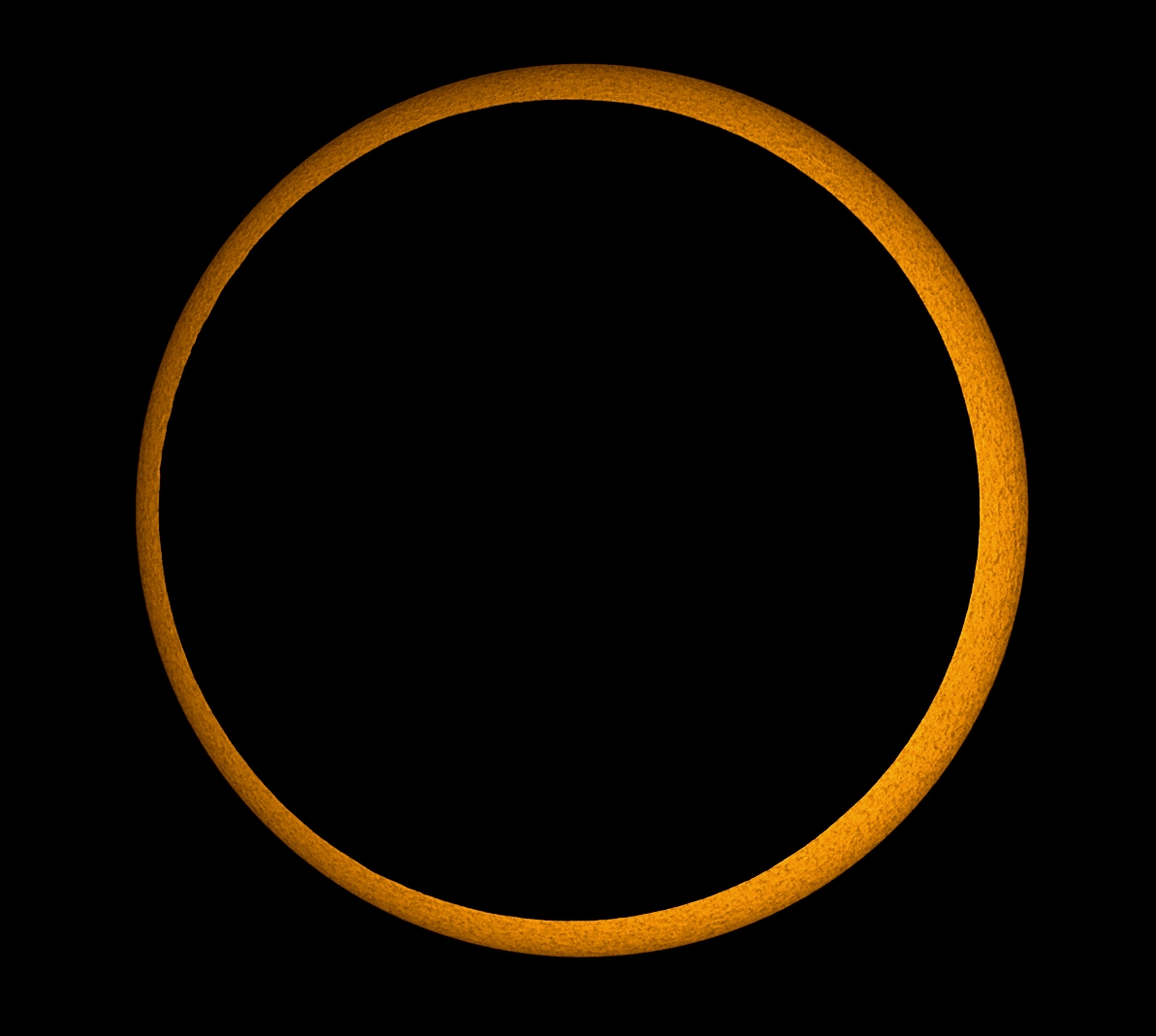
Then spend twice as much time thinking of something good to remember.  And if you can’t tap into happy memories to wipe out bad memories like bleach on bloodstains, then you should create some. Happy memories, not bloodstains. Like today’s NASA Astronomy Picture of The Day. Today, it’s the Annular Solar Eclipse I will see tomorrow night from here in SoCal, even though I won’t be in the path for the full eclipse pictured, but will see a small bite out of one side (i.e. a partial annular solar eclipse.

Don't forget that last step for heaven’s sake. Learn how to remember it. The happy memory, not the brain worms.

Tuesday, May 15, 2012

An Apple A Day?


"And then I thought, 'Wouldn't breakfast be healthier if my waffle were made of salad?'"
-Scott, on morning meal alternatives 

This article, “Gross Intredients in Processed Foods” in today’s Huffpo breathlessly breaks the “news” that some of the stuff in processed foods would gross us all out, if only we knew. So they tell us,  and the answers are "gross", which is a precise scientific term of art meaning Eight on a 1-10 scale from cringeworthy, to vomit inducing scrotum punch. Ok, I made that last part up. But in fairness to the author, she's an idiot.

Here’s what’s in an international orange bottle of Cheeze Whiz Squeeze: Whey, milk, milkfat, dried corn syrup, water, sodium phosphate, contains less than 2 percent of: Food starch-modified, salt, maltodextrin, lactic acid, mustard flour, Worcestershire sauce (vinegar, molasses, corn syrup, water, salt, caramel color, garlic powder, sugar, spices, tamarind, natural flavor), sorbic acid as a preservative, oleoresin paprika (color), cheese culture, annatto (color), enzymes. Yikes, right?

But not only is the science in this story rather squishy, they bury the lead. Turns out foodie bloggers are right: not only does real slow food taste better than fast food; it’s better for you! This scientific fact was cleverly deduced by Dr. David Katz, who knows what's best. “An overhaul of food labeling is most likely still a while off. In the meantime, consumers' increased curiosity into food production could result in a return to cleaner eating. 'What I know best is that the foods best for health are generally not prone to any such adulterations,' writes Katz, who suggests eating foods made from ingredients you have heard of, recognize as either a plant or animal and can pronounce.”

Seriously? Whether I can pronounce ingredients? Then again... Digest pantothenic acid, pyridoxine, phytosterols, alanine. Consider the lowly monosaccharide and it’s greasy cousin oligosaccharide. To me, these sound like pretty gross and unpronounceable ingredients. Hence, I conclude they are clearly not better for my health.  I mean, Dr. Katz might point out that monosaccharides totally sounds like a social disease; or it might if I could pronounce it. In case your curiosity has been aroused, these are the ingredients in apples. Moreover, even if consumers’ curiosity into apple production remains unaroused, these are still the ingredients in apples. 

The Huffpo article is to science as Cheese Whiz Squeeze (“Now with more Trademarks!”) is to cheese. But thanks, Sara Klein, Associate Editor, Healthy Living, for this amazing factoid stuffed taste of the science of healthy living.

In the event that you’re interested in an important issue to all who prefer their apples from trees and not GMO test tubes, check this out: GM Food: Don't Ask, Don't Tell? in the Utne Reader. There will be an initiative on labeling GMO foods on the upcoming CA ballot and this article gives a good, if biased*, background on the topic, along with a number of references. 

* Of course the GMO article and all of it's references have a bias. That is, if you want to consider facts capable of being biased. To paraphrase Respectful Insolence, facts can neither be biased, nor insolent. OBTW, evolution is true.

Thursday, May 10, 2012

Fools and Liars


“As blushing will sometimes make a whore pass for a virtuous woman, so modesty may make a fool seem a man of sense.”

If modesty makes a fool seem like a man of sense, does immodesty make a fool seem even more foolish? Or does he merely remain a shameless whore who also seems a fool?

I'lll take a lot of credit for giving Swift the inspiration for the above quote. I spun him over in his grave a few times by playing Mitt Romney’s recent radio interview taking credit for the bailout that insured General Motors’ survival.

Thursday, April 26, 2012

Responsible Vegetable Gardening - Brussels Sprouts


"You must take personal responsibility. You cannot change the circumstances, the seasons, or the wind, but you can change yourself. That is something you have charge of."

Vegetable gardeners who cultivate year-round vegetable gardens - as we can here in Zone 9 - must learn to embrace the mysteries; and by that I don’t mean mysteries like why someone would want to grow Brussels sprouts in the first place. I don’t judge. For the purpose of classifying the vegetables we cultivate at any given moment, I refer to the mysteries of seasonal transitions: when can I stop growing cool season veggies like cole crops (cabbage, broccoli, Brussels sprouts); and when can I put the tender tomato starts in? Especially, when do I get to give up on the languishing Brussels sprouts and sew the watermelon seed?

Mother Nature doesn’t simply flip a switch at the spring equinox and declare that those languishing cabbages won’t ever get around to making heads, or that the world is now safe to grow eggplants. Around here, she tends to tease the gardener with a week or two of lovely warm weather and then circle back around and ambush us with a whack of winter weather. (And, what the hell do those anorexic, inappropriately dressed weather “gals” mean when they say well, we’re in for some unseasonable weather? Before weather can become unseasonable, you have to have discernable seasonal transitions, or at least discernable seasons, i.e. seasonable seasons. We don’t.)

Which gets me to my real subject here: those deadbeat losers of the vegetable kingdom - Brussels sprouts. We have only left the malingering Brussels sprouts in our vegetable garden for the upcoming Spring Garden Festival. It’s not just that we don’t want a patch of bare ground, or that we’re reluctant to expose tender vegetable to “unseasonable” weather. It’s certainly not that we expect to actually see a respectable ROI on our Brussels sprouts venture.

Speaking only for myself and not my fellow veggie gardeners, my reason for permitting the Brussels sprouts to remain in the garden is that they are a harsh lesson in responsible vegetable cultivation. If not damning evidence of their worthlessness, their unproductively is surely the harbinger of doom for our Brussels sprouts. These pretentious celebrities of the vegetable kingdom that spell their first name with a capital letter are as worthless as any Hollywood celebrity. 

When we were kids, we used to call them Mighty Mouse Cabbage, but that didn’t mean we liked eating them. I have met exactly one adult in my entire life that claims to like eating Brussels sprouts. Cooking the fruit of the Brussels sprouts makes your house smell like the unventilated hallway of a cheap boarding house at dinnertime, even down to the finishing notes of unwashed sweat socks lingering in the kitchen the next morning.

I conclude my case against Brussels sprouts by somewhat redundantly concluding that any annual vegetable that takes more than 90 days to ripen (or not to even bother to ripen) isn’t going to work in the microclimate of our garden. I should admit here that I have seen a vegetable garden about 5 miles away grow these plants taller than I, and so thickly productive that their stalks look like cylindrical cobblestone roads. In fairness to me, a professional master gardener who lavishly feeds them her homemade compost tends that garden. That said, I maintain that it is not a responsible use our sparse water and precious compost, not to mention my meager unpaid amateur gardening talents, for some stupid vegetable that ends up being an open invitation to several generations of short-lived white flies to enjoy themselves at leisure.

But wait until next week, after the Festival. Then, look out.

Imagine mama whitefly, who today gathers her fledgling babies around their whitefly hearth and tells them about the rich feeding grounds in plot #10. There, my darlings, you will find yummy, leggy Brussels sprouts, with lush leaves and anemic fruit that have nurtured generations of our ancestor flies, making us the mightiest whitefly kingdom on the block. Now imagine how, come next week, the kids will find a figurative scorched bare ground. Hah! It will be like global warming for our whitefly population; or 100-year drought, right? This leads me to admit that another reason to leave the sprouts in is to lull the whiteflies into complacency and indulge my vengeful fantasy. Surely, one of the perks of being a vegetable gardener is the totally godlike power to change the environment of pests. Apocalypse next Tuesday! Citizens of entire whitefly nations will rise up and turn upon their failed leaders as their world descends into the chaos, and as whitefly civilization breaks down, and as entire whitefly cultures are lost in nightmares of starvation and deprivation. (Disclaimer: I could be less than accurate about whitefly biology and ethnography here, but I’m probably not. I’m not a botanist or a fortuneteller. Based on this post, one might even say that I’m not much of a gardener either.) 

It is a challenge to garden responsibly, particularly as our seasonal circumstances are so mercurial. One of the changes we can control is what we plant and don’t plant. As god is my witness, I’ll never plant Brussels sprouts again.